


Prenatal Massage for Pelvic Girdle Pain: A How-To
Table of Contents
What Prenatal Massage for Pelvic Girdle Pain Actually Is
Understanding Pelvic Girdle Pain vs. Other Pregnancy-Related Discomfort
Prenatal Massage Safety During Pregnancy
Prenatal Massage Positioning for Comfort and Support
Step-by-Step Self-Guided Massage Routine for Pelvic Girdle Pain
Step 1: Set Up Your Space and Position
Step 2: Glute and Outer Hip Release
Step 3: Lower Back and Pelvic Ligament Release
Step 4: Sacroiliac Area Support
Step 5: Close Out and Get Up Safely
Adapting the Routine by Trimester and Symptom Severity
What to Tell Your Massage Therapist About Pelvic Girdle Pain
Start With Where It Hurts, and How It Hurts
The Specifics Worth Sharing
What to Say During the Session
How Long Prenatal Massage Sessions Should Last
When to Stop Massage and Seek Clinical Assessment
Realistic Expectations: What Prenatal Massage Can and Can't Do
Frequently Asked Questions
Last Updated: October 9, 2026
What Prenatal Massage for Pelvic Girdle Pain Actually Is
Prenatal massage for pelvic girdle pain is a specialized therapeutic approach designed to ease the discomfort that develops around your pelvis, lower back, and hips during pregnancy. At GETaMASSAGE, we understand that this type of pain can make everyday activities feel exhausting, walking, climbing stairs, even rolling over in bed can become a challenge.
Pelvic girdle pain happens because pregnancy shifts your center of gravity and loosens the ligaments that support your pelvis. Your muscles work overtime to compensate. Prenatal massage targets the specific muscle groups and soft tissue around your pelvic region to reduce tension and improve how those muscles function.
This isn't just a relaxation massage. It's therapeutic work focused on the areas causing you real pain. The goal is to help your body feel more stable and comfortable so you can enjoy the rest of your pregnancy.
Pro Tip Many expectant mothers wait until pain becomes severe before trying prenatal massage. Starting earlier, even at the first sign of discomfort, often prevents pain from getting worse and gives you more relief throughout your pregnancy.
Understanding Pelvic Girdle Pain vs. Other Pregnancy-Related Discomfort
Not all pregnancy pain is the same. Understanding what you're actually experiencing matters because the treatment approach changes.
Pelvic girdle pain is localized around your pelvis, sacroiliac joints, and lower back. You feel it in a specific spot, usually one side feels worse than the other. It's often sharp or stabbing when you move, and it gets worse with activities like walking or climbing stairs. This is the pain prenatal massage addresses most effectively.
Pelvic floor pain is different. It's felt deeper inside, around the muscles that support your bladder and bowel. You might feel pressure, heaviness, or pain during or after intercourse. While prenatal massage can help with some pelvic floor tension, this type of pain often needs specialized pelvic floor physical therapy.
General lower back pain spreads across your whole lower back and often feels more like an ache than sharp pain. It's usually from your growing belly pulling your posture forward. Prenatal massage helps, but so do posture adjustments and core strengthening.
The distinction matters because a massage therapist needs to know exactly where your pain lives to treat it right. When you book your session, be specific about your symptoms and where you feel them most.
Watch Out If your pelvic pain is accompanied by numbness, tingling down your leg, or difficulty controlling your bladder or bowel, stop massage and contact your healthcare provider right away. These can signal nerve involvement that needs medical evaluation.
Prenatal Massage Safety During Pregnancy
Safety is the foundation of everything we do at GETaMASSAGE when working with expectant mothers. The good news: prenatal massage is generally safe when performed by a therapist trained in pregnancy-specific techniques.
MyFrenchPhysio
Your body changes dramatically during pregnancy. Blood volume increases, your ligaments soften, and your organs shift position. A therapist who understands these changes knows which techniques to use and which to avoid.
Key safety considerations:
Avoid deep pressure on certain reflex points on your feet and hands that can stimulate contractions
Never massage directly on your abdomen
Use appropriate positioning so you're never flat on your back for extended periods
Adjust pressure as your pregnancy progresses, what feels good in the first trimester may need modification later
Watch for signs of complications like bleeding, severe cramping, or sudden swelling
According to the American College of Obstetricians and Gynecologists guidance on pregnancy wellness, massage therapy can be a safe complementary approach when performed by qualified practitioners. The key is finding a therapist trained specifically in prenatal work.
Before your first session, tell your massage therapist:
How far along you are
Any complications or concerns your doctor has mentioned
Exactly where your pain is located
Any previous injuries or health conditions
This information helps your therapist customize the session for your specific needs and pregnancy stage.
Prenatal Massage Positioning for Comfort and Support
How you're positioned during a prenatal massage matters as much as the massage itself. Poor positioning can actually increase discomfort instead of relieving it.
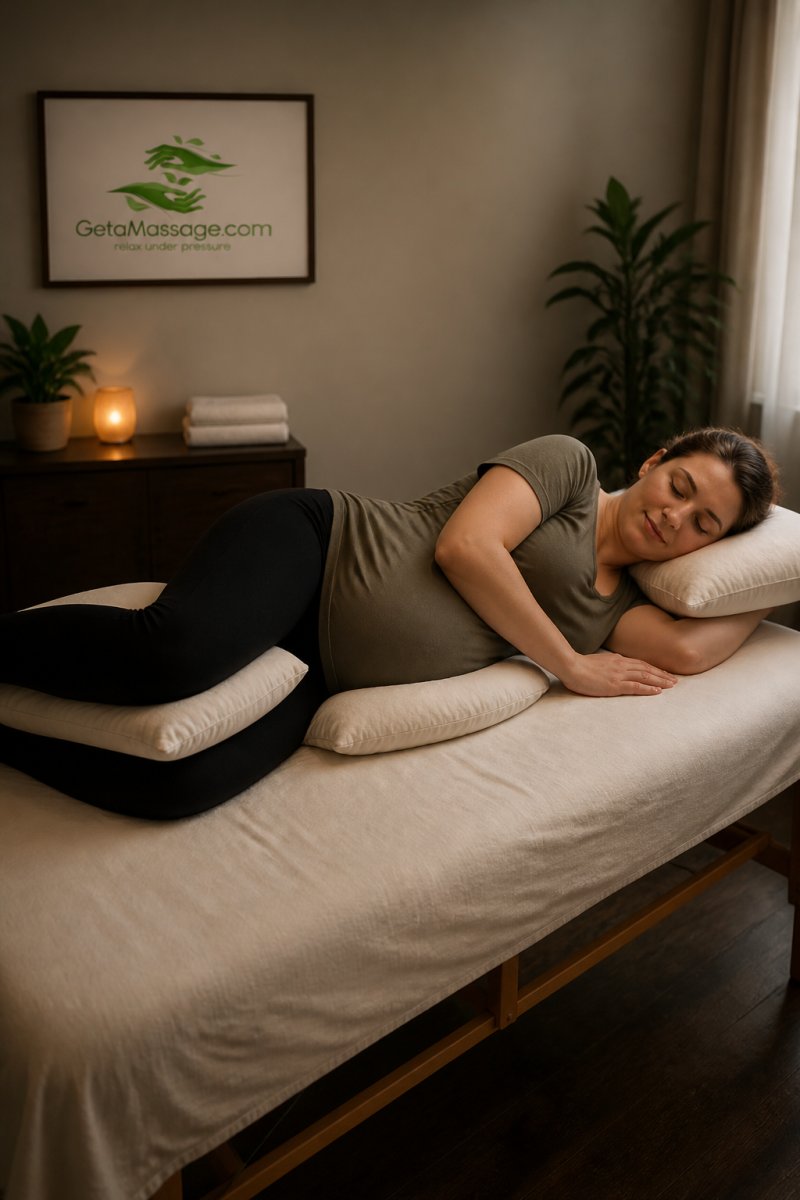
The side-lying position is the gold standard for prenatal massage, especially as you get further along. It takes pressure off your abdomen, allows your therapist to access the muscles causing pelvic girdle pain, and keeps blood flow steady to both you and your baby.
What proper side-lying setup looks like:
You lie on your left side (this position supports blood flow to your baby)
A pillow supports your head and neck
A pillow goes between your knees to keep your pelvis aligned
A pillow or bolster supports your belly
Your top arm rests comfortably in front of you
Your bottom leg is straight, top leg is bent
This positioning naturally stabilizes your pelvis and takes stress off the sacroiliac joints, exactly where pelvic girdle pain lives.
Key Takeaway The right positioning can make the difference between a massage that helps and one that leaves you more uncomfortable. Never lie flat on your back for extended periods during pregnancy massage, and always speak up if a position doesn't feel right.
Step-by-Step Self-Guided Massage Routine for Pelvic Girdle Pain
You can do targeted work at home between professional sessions. This routine focuses on the muscle groups that most often contribute to pelvic girdle pain, and it's built so you can adapt it by trimester and by how you're feeling that day. Plan on about 15-20 minutes.
A few ground rules first:
Pressure scale: think of 0 as no sensation and 10 as "I need to push your hand away." Stay between 3 and 5, a clear, comfortable pressure you can breathe through. Never chase a 7 or 8 at home.
Stop immediately if you feel sharp pain, burning, numbness, tingling, or anything that radiates down your leg. That's a signal to back off, not push through.
Skip this routine entirely on days when you have bleeding, cramping, a fever, a severe headache, sudden swelling, or any new symptom your provider hasn't cleared.
Check with your provider first if you have a history of preterm labor, placenta previa, cervical insufficiency, or you've been told you're on pelvic rest.
Step 1: Set Up Your Space and Position
Find a quiet spot where you won't be interrupted. A firm bed works, but a yoga mat on the floor gives you more stability and lets you control your own leverage better.
Lie on your left side. Support your head and neck with a pillow, put a pillow between your knees, and tuck a small pillow or rolled towel under your belly. Your bottom leg stays straight, your top leg is bent. This is your base position for everything that follows.
Spend a full minute just breathing before you touch anything. Slow, deep breaths tell your nervous system it's safe to let go, and tight muscles release far more easily when you're not braced.
Step 2: Glute and Outer Hip Release
Your glutes and outer hip muscles are frequent culprits in pelvic girdle pain. When they're tight, they tug on the pelvis and make it feel unstable.
Reach your top hand behind you and find the fleshy part of your hip, the big muscle you'd sit on. Use your fingertips or the heel of your hand and make slow, small circles, working from the top of your hip down toward your sitting bone. Spend 2-3 minutes here, breathing deeply the whole time.
Then shift slightly forward to the outer hip muscle, the one that runs along the side of your thigh. This area holds a lot of tension during pregnancy. Use the same slow circles. If you find a tender spot, rest gentle pressure there for 10-15 seconds and breathe into it rather than grinding on it.
Step 3: Lower Back and Pelvic Ligament Release
The ligaments supporting your pelvis get stretched and stressed as pregnancy progresses, and your lower back muscles tighten up to compensate.
Reach your hand to the small of your back on the side you're lying on. Find the muscle that runs along your spine, your erector spinae. Use slow, gentle strokes from your lower back upward toward your mid-back. Keep the pressure light to moderate; this is soft tissue work, not deep tissue.
Spend 3-4 minutes here. Breathe slowly and let your belly soften. Muscles release much more readily when your nervous system is calm.
Step 4: Sacroiliac Area Support
Your sacroiliac joint, where your spine meets your pelvis, is a common pain generator in pelvic girdle pain. You can't massage the joint itself, but you can work the muscles around it.
Find the bony triangle at the base of your spine (your sacrum). Using your fingertips, make small circles on the muscle tissue just beside the sacrum, on the side you're lying on. Work slowly. This area is sensitive, so aim for a moderate 3-4 on the pressure scale, not feather-light, not deep.
Spend 2-3 minutes here. Many people feel a noticeable release in this area.
Step 5: Close Out and Get Up Safely
When you've finished all four areas:
Rest in your side-lying position for about 5 minutes.
If it's comfortable, roll slowly onto your back and do a few gentle stretches.
To get up, roll onto your side, push up with your arms, and come to sitting before standing. Don't pop straight up.
Adapting the Routine by Trimester and Symptom Severity
Your body changes fast during pregnancy, and this routine should change with it.
First trimester: Keep sessions short, 10-15 minutes, and pressure light. Your body is adjusting, and there's no need to push.
Second trimester: This is often when pelvic girdle pain peaks. The full 15-20 minutes is usually fine, and you can work up to a 4-5 on the pressure scale if it feels good.
Third trimester: Positioning gets harder. Shorten to 10-15 minutes, use more pillows, and don't hesitate to break it into two shorter sessions, one for glutes and hips, one for back and sacroiliac area.
On flare-up days, drop the pressure by a point or two and shorten the session. On good days, you can do the full routine. Consistency matters far more than intensity.
Aim for 3-4 sessions per week. Most people notice gradual improvement over 2-3 weeks of steady practice. If nothing changes after a few weeks, or if pain is getting worse, that's your cue to get assessed rather than push harder.
Key Takeaway Self-massage works best when you're consistent, patient, and honest about what your body is telling you. You're not trying to fix everything in one session, you're gradually teaching tight muscles to let go and stay that way. What to Tell Your Massage Therapist About Pelvic Girdle Pain The information you share before and during your session shapes the entire appointment. Being specific and honest helps your therapist target the right areas and avoid the wrong ones. Start With Where It Hurts, and How It Hurts Pelvic girdle pain, pelvic floor pain, and ordinary pregnancy back pain can feel similar from the inside, but they respond to different approaches. Describing the pattern clearly helps your therapist know what they're working with. Pelvic girdle pain tends to sit around the pelvis, the sacroiliac joints, and the lower back. It's often sharper on one side, worse with walking, stairs, or rolling over in bed, and it may feel like a catching or stabbing sensation when you move. Pelvic floor pain is felt deeper inside, pressure, heaviness, or pain around the muscles that support your bladder and bowel. It may show up during intercourse or with bowel movements. This often needs pelvic floor physical therapy, and massage is a supporting tool rather than the main fix. General lower back pain usually spreads across the whole lower back and feels more like a dull ache than a sharp catch. It's often driven by posture changes as your belly grows. If you're not sure which one you have, describe it in plain language: where it is, what makes it worse, what makes it better, and what it feels like. That's more useful to your therapist than a label. The Specifics Worth Sharing When you book, be ready to cover: Exactly where the pain lives, one side worse, both sides equal, lower back, hip, or sacroiliac area What activities trigger it, walking, stairs, rolling over in bed, sitting for long stretches, standing on one leg What time of day it tends to be worst How long you've had it, and whether it's been getting better, worse, or staying the same Anything you've tried that helped or made it worse Your current pregnancy stage Any complications your provider has mentioned Whether you're also seeing a physical therapist or chiropractor, so care can be coordinated What to Say During the Session Communication doesn't stop once you're on the table. Speak up if: Pressure feels too deep or too light A position becomes uncomfortable You feel any sharp pain, numbness, or tingling You need to change position or take a break A good therapist will check in and adjust as they go. You're not being difficult by speaking up, you're giving them the information they need to do their job well. Before your first session, jot down your answers to the questions above on your phone. It's easy to blank on specifics when you're lying on a table trying to relax. How Long Prenatal Massage Sessions Should Last Session length depends on your needs and how far along you are. First trimester: 30-45 minutes works well. Your body is adjusting to pregnancy, and shorter sessions let your therapist focus on the specific areas causing pain without overtaxing your system. Second trimester: 45-60 minutes is often ideal. This is when pelvic girdle pain often peaks, and you benefit from more thorough work on the affected areas. Third trimester: 45-60 minutes, but sometimes shorter is better if you're uncomfortable lying on your side for extended periods. Your therapist can adjust based on what feels right. Frequency matters more than length. Most people benefit from sessions every 2-3 weeks throughout pregnancy. Some find weekly sessions help during flare-ups. Think of it like this: a 60-minute session every 3 weeks is better than a 90-minute session once a month. Consistency keeps your muscles from re-tightening and rebuilding tension. Book your sessions in advance if possible. When you're in pain, it's tempting to wait until you can't stand it anymore. But preventive, regular massage keeps pain from escalating in the first place.
When to Stop Massage and Seek Clinical Assessment
Prenatal massage is a powerful tool, but it's not a substitute for medical care. Knowing when to stop and seek professional evaluation is crucial.
Stop massage and contact your healthcare provider if you experience:
Vaginal bleeding or unusual discharge
Severe or sudden cramping
Dizziness or shortness of breath
Chest pain or pressure
Severe headache
Swelling in your face or hands that comes on suddenly
Pain that gets dramatically worse instead of better after massage
Numbness or tingling that radiates down your leg
Loss of bladder or bowel control
Fever
These symptoms can indicate complications that need medical attention, not massage.
Also seek clinical assessment if:
Your pain is completely one-sided and severe (this can signal sacroiliac joint dysfunction that needs physical therapy)
Pain persists despite consistent massage and self-care
Pain suddenly changes character or location
You develop new symptoms alongside the pelvic girdle pain
A physical therapist trained in prenatal care can assess whether your pelvic girdle pain needs targeted therapeutic exercises or if there's underlying dysfunction massage alone won't address. Many people benefit from combining massage with physical therapy, they work together effectively.
Realistic Expectations: What Prenatal Massage Can and Can't Do
Prenatal massage for pelvic girdle pain works. But understanding what it can realistically accomplish helps you set the right expectations.
What prenatal massage can do:
Reduce muscle tension that contributes to pelvic girdle pain
Improve how your muscles function and support your pelvis
Decrease pain during daily activities
Help you sleep better
Reduce stress and anxiety
Improve circulation to affected areas
Make you feel more comfortable in your own body
What prenatal massage cannot do:
Fix structural pelvic misalignment (that requires physical therapy or chiropractic care)
Permanently eliminate pelvic girdle pain if the underlying cause isn't addressed
Replace medical treatment for complications
Work as a one-time fix (consistency matters)
Prevent all pregnancy-related discomfort
Most people notice improvement within 2-3 sessions. Real, lasting relief usually takes 4-6 weeks of consistent work. After that, maintenance sessions every 2-3 weeks keep pain from returning.
The timeline varies. Some people feel dramatically better quickly. Others see gradual improvement. Both are normal.
Think of prenatal massage as part of a bigger picture. Combine it with:
Prenatal physical therapy exercises
Good posture and body mechanics
Supportive pillows and positioning
Staying active (walking, swimming, prenatal yoga)
Adequate rest
This combination approach gives you the best shot at managing pelvic girdle pain effectively throughout your pregnancy.
Frequently Asked Questions
Can prenatal massage help with pelvic girdle pain?
Yes. Prenatal massage targets the muscles, ligaments, and soft tissue around the pelvis, sacrum, and hips that tighten during pregnancy. By releasing tension in the glutes, hip flexors, and pelvic floor muscles, massage can reduce pressure on the sacroiliac joints and ease discomfort. Results vary, some people notice relief after one or two sessions, while others need consistent sessions over weeks to feel significant improvement. A qualified prenatal massage therapist can tailor techniques to your specific pain pattern.
Is prenatal massage safe during pregnancy?
Prenatal massage is generally safe when performed by a therapist trained in pregnancy care. They know which pressure points to avoid and how to position you safely at each trimester. Always tell your healthcare provider you're considering massage, especially if you have pregnancy complications, high blood pressure, or preeclampsia. Work with a licensed massage therapist experienced in prenatal work to minimize any risk.
What should I tell a massage therapist about pelvic girdle pain?
Be specific: describe where the pain is (pubic symphysis, sacroiliac joints, hip, or lower back), when it's worst (morning, after activity, at night), and what makes it better or worse. Mention your trimester, any previous injuries, and whether you've had physical therapy. Tell them if certain movements trigger sharp pain versus dull ache. This helps the therapist choose the right techniques and avoid aggravating your symptoms. Honest communication ensures a session that actually helps.
How long should a prenatal massage session last?
Shorter sessions work well if you're managing one main pain point; longer sessions allow time for full-body tension release and pelvic girdle pain relief. Start with what feels manageable, many people find weekly or bi-weekly sessions most effective for sustained relief. Discuss duration with your therapist based on your comfort and symptoms.
Pelvic girdle pain during pregnancy is real, and you don't have to just tough it out. Prenatal massage, combined with other supportive care, can make a meaningful difference in how you feel. When you're ready to explore specialized prenatal massage tailored to your specific pain pattern, book a session with GETaMASSAGE. We'll work with you to create a customized approach that addresses your pelvic girdle pain and helps you feel more comfortable during this important time.
Book a Session



Comments